Note: Most of my research is exploring material that is useful to my studies as an animator at the moment. If I feel as if the study does not benefit me, I will not list it.
Today I'm going to talk about Joints.
There are immovable joints, slightly movable joints, and fully movable joints.
The most I got out of immovable joints were the sutures on the human skull.

Apparently they are held together by fibrous material, allowing for the pieces of the skull to be held together. Why they are not just one bone, I'm not sure. But they connect separate skull bones to make the shape of the skull stay together.
There was nothing interesting for me to say about slightly movable joints at this time.
The most important joints overall though, would have to be the fully movable joints, or as most of them are commonly called; synovial joints.
These are the joints that are designed to move and be moved around by your command. Though these bones have their occasional limits.
The first one I shall be talking about is the ball and socket joint.

These joints are commonly seen as the joints for your shoulder and thigh.

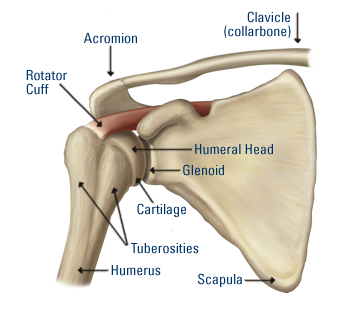
This joint allows for complete movement and rotation in just about any direction. The only thing they can't do in comparison to other bones, is glide.
They are only ever limited by the ligaments and muscles of your body. In certain cases, it's possible to stretch the joints past the limits. In my case, I've done this before with my arms. I would raise them to the back of my body and pull them back all the way while they are clamped together. I meet some resistance, but the process is not too painful.

The next one is the Hinge Joint.

The hinge joint behaves similarly to how the name suggests. It's a joint that only allows the bone to bend and extend, though it is also limited by bone structure, muscles, and ligaments.
The two main users of this bone are the arm and knee.
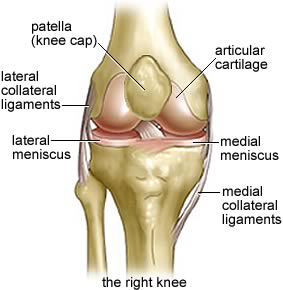
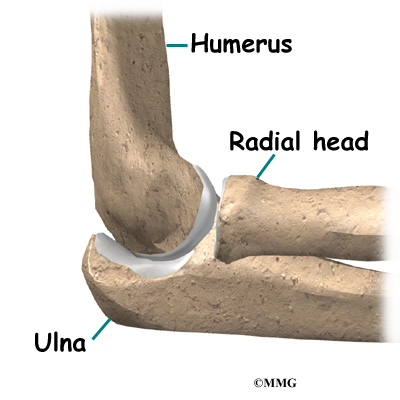
These bones are very important for keeping our physical structure in place. For instance, if our knee was a ball and socket joint with the same amount of freedom, we would probably be unable to run or walk properly most of the time unless the ligaments were intensely strong. Though our arms may benefit from it, if the ligaments and muscles were structured enough.
Considering these joints are right next to the most freedom allowing joints, they provide a lot of limitations themselves. They define what is an effective movement or not. For starters, if one were to go in for a punch, one would not just toy around with their ball joint for flashiness. They would go for a straight punch and get it over with.

Here's a little tidbit: Note the little bulge in front of the knee. That is called the patella, it's meant to protect your joint from being harmed or dislodged, though the patella itself is not fully attached to the knee, it does a fairly good job.
The next joint is a pivot joint.

It does just as the image claimed. It turns from side to side and little to no else. There are only three of these types of joints in the human body, one in the neck and one in both elbows.


Their sole purpose is to rotate from side to side. It allows us to turn our necks to the right and left. It allows us to spin our forearms like a drill and gives our wrist a longer twist.
Still, this is limited; One cannot turn their head all the way around or you'd snap your neck. You must physically turn your torso around to completely see what is behind you.
Also, you can't really turn your elbow too far, or you risk pulling the humerus out of alignment with the ulna and radius.
And so we come to the condyloid joints (ellipsoidal).

Think of this joint as something similar to an atari joystick.
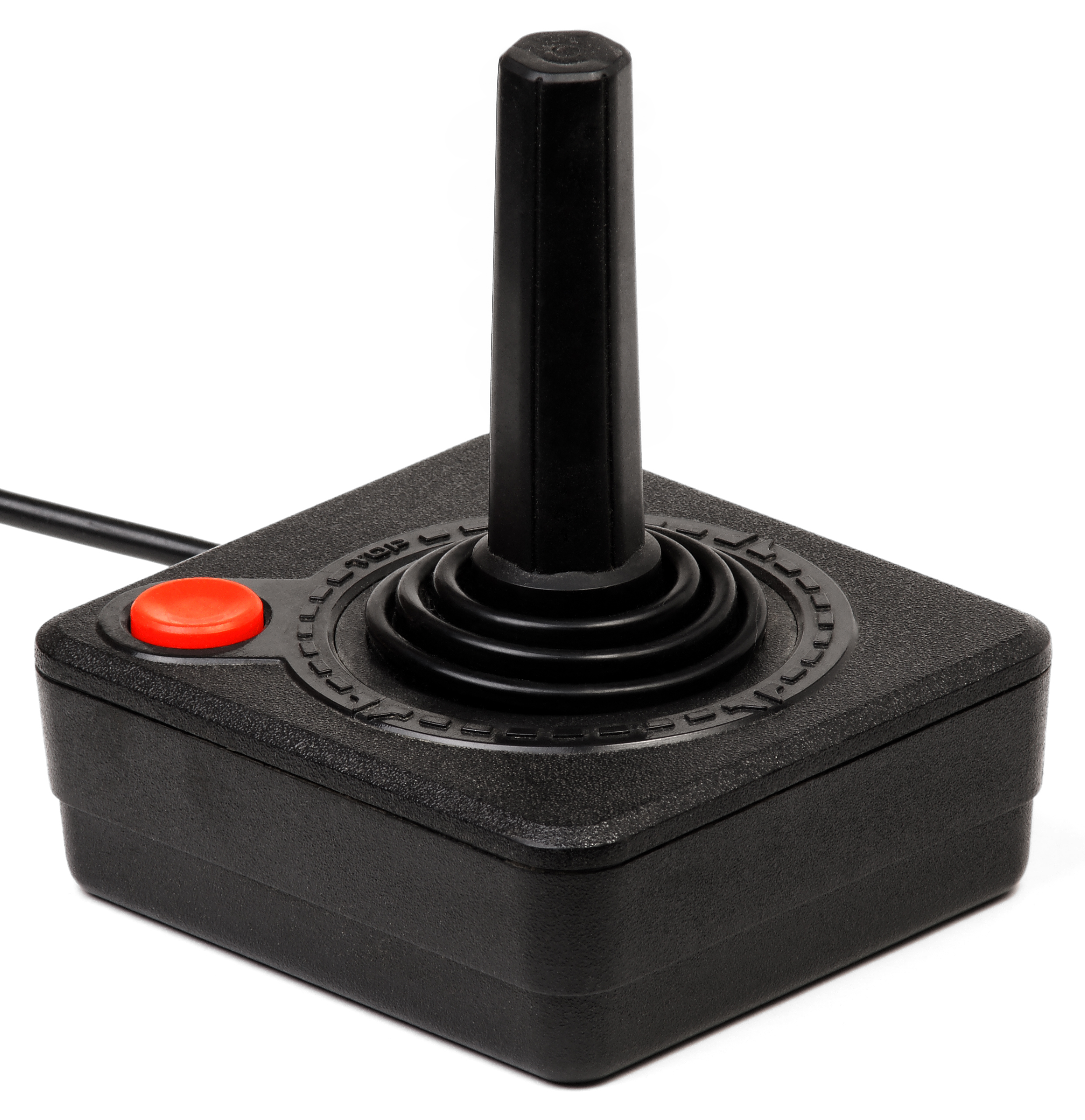
It can move around in all directions, but it cannot rotate, and has very limited circumduction due to the ligaments and muscles that bind it together. This type of joint is used for the wrist, your fingers, toes, and the Atlanto-occipital joint in your skull.

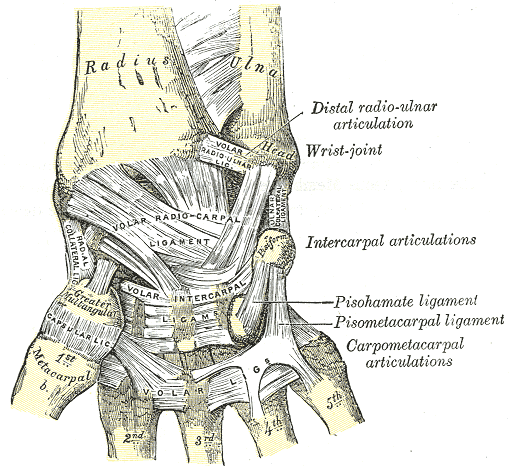
Fun fact: You may think you're rotating your wrist, but you really aren't. Actually grab hold of your forearm tightly and you'll suddenly find yourself unable to move your wrist in any sort of rotational manner.

Your fingers essentially function as many small joysticks since they have free movement as well (and some limited rotation if you physically force them to turn). The same applies to your toes.
As for the joint in the skull, that one is actually used for flexion and reflexion and the occasional laterotation. Essentially, it's what lets you move your head up, down, and around without needing to turn it.
Next is the Saddle Joint.

It allows for all free movement, including the limited circumduction.
You can only really find the saddle joint in the Carpometacarpal joint of your thumb.
.jpg)
This joint is unique in that it offers more options for free movement than the other finger joints, being that it is the one Carpometacarpal joint we can control movement wise. It's this freedom that gives our thumb such usability to clench into our fists and claw at objects.
If the thumb were like the other fingers, it would just have a limited clawing movement that your other fingers have.
Finally comes the last set of joints. The Plane (or Gliding) Joints
These joints only allow a gliding movement, but I'm not entirely sure if I grasp the concept.

You can normally find these joints on your ankles, wrists, and elbows.
And for your own sake everybody, here's a video detailing most of what I covered here.
-----------------------------
And there you have it, that's most of my research regarding joints so far. I may actually make an anatomy animation test soon to see how well I understand how these joints work.
I've already mapped the idea in my head. It shall be a boxer, or a wrestler doing a few punches, so look forward to that, ciao.

No comments:
Post a Comment